Somatic Yoga for Gentle Movement & Body Awareness
Explore slow, beginner-friendly movement practices designed to help you pay closer attention to breathing, comfort, mobility and body awareness at your own pace.
New to Somatic Yoga?
Begin with the basics before moving into longer routines. These guides explain the practice in simple language and help you choose a comfortable starting point.
Somatic Yoga for Beginners
Understand the basic approach, pacing and what to expect from a gentle beginner practice.
02Somatic Hip Exercises
Explore slow hip-focused movement ideas and practical ways to keep the range comfortable.
03Somatic Yoga & Weight Management
Learn where gentle movement may fit within a broader lifestyle approach without unrealistic promises.
Find the Guidance You Need
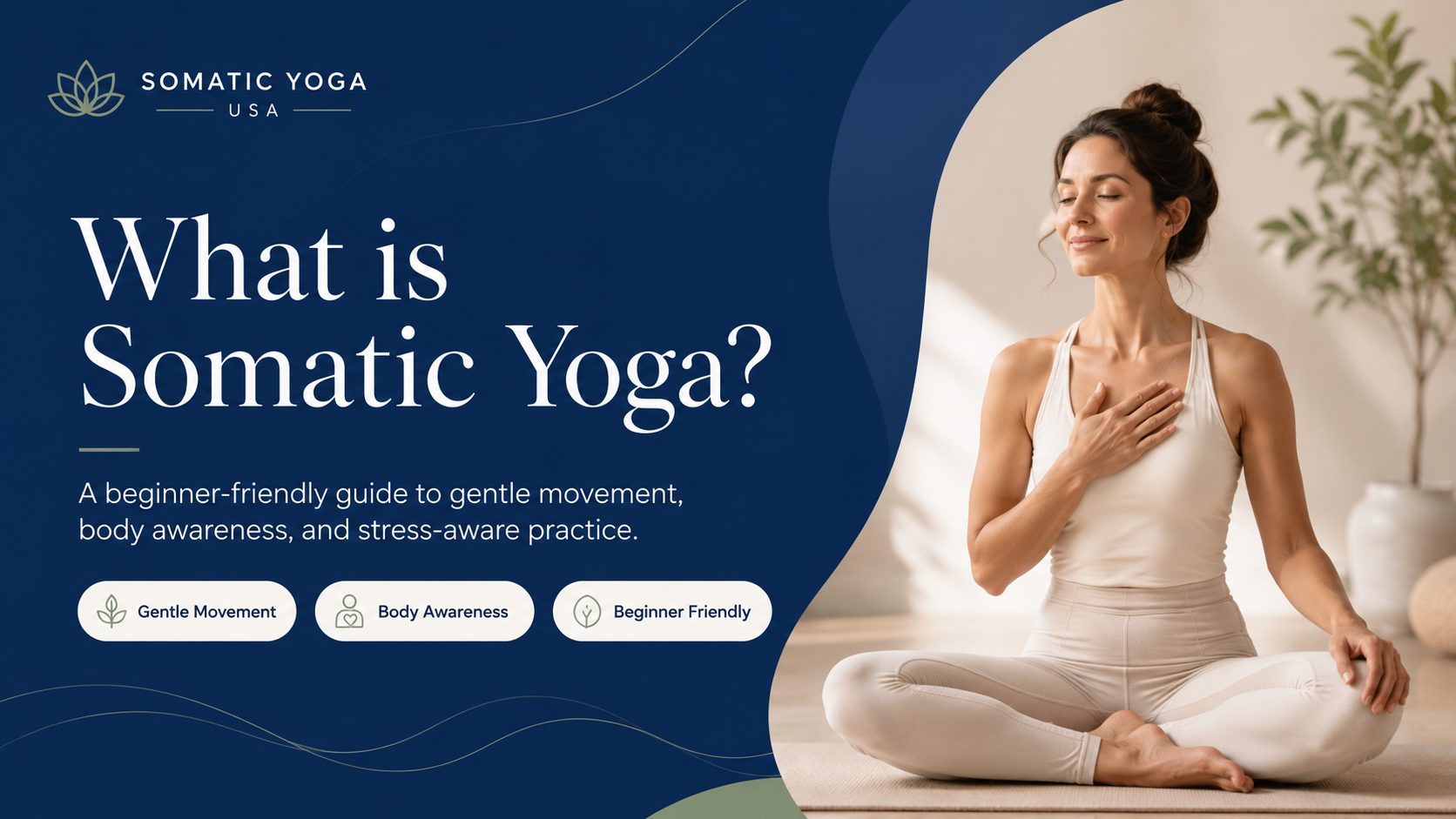
What Is Somatic Yoga?
Somatic yoga is a gentle movement approach that places attention on how movement feels rather than how a pose looks. Sessions commonly use slower pacing, smaller ranges of motion and pauses that allow you to notice breathing, muscle tension and comfort.
For beginners, this can make the practice feel less performance-focused than a fast-paced class. The goal on this site is not to promise treatment or a medical outcome. Instead, our guides focus on movement education, body awareness and practical ways to approach a gentle home practice.
If you are new, start with short sessions and comfortable ranges rather than trying to complete every movement at once. Consistency and comfort are more useful starting points than forcing flexibility.
Read the full beginner guide →Four Beginner Movement Ideas
These simple examples show the kind of slow, attentive movement commonly used in beginner practice. Keep the range comfortable and stop if something feels painful.
Body Scan
Spend a quiet moment noticing areas of contact, breathing and tension before beginning movement.
Gentle Breathing
Allow the breath to stay natural while noticing how the ribs, abdomen and shoulders respond.
Pelvic Tilt
Use a small, comfortable rocking movement rather than pushing toward the largest possible range.
Knee Rock
Let the knees move only as far as feels easy while observing how the hips and lower back respond.
Move Within a Comfortable Range
Gentle does not mean appropriate for every person or every situation. Your current health, injuries, pregnancy, recent surgery and unexplained symptoms can affect which movements are suitable.
- Stop a movement if it causes sharp, increasing or unusual pain.
- Avoid forcing flexibility or range of motion.
- If you have an injury or medical condition, ask a qualified healthcare professional whether a particular exercise is appropriate for you.
- Seek appropriate medical care for new or concerning symptoms rather than relying on online exercise information.
How We Approach Wellness Content
Health and movement topics need careful wording. Our goal is to explain gentle movement without presenting general wellness information as diagnosis, treatment or guaranteed health outcomes.
We separate educational explanation from medical advice, use clear safety language where appropriate and maintain dedicated policy pages so readers can understand how the site is produced.
More Somatic Yoga & Wellness Guides
Read our newest beginner-friendly articles on movement, mobility and general wellness.
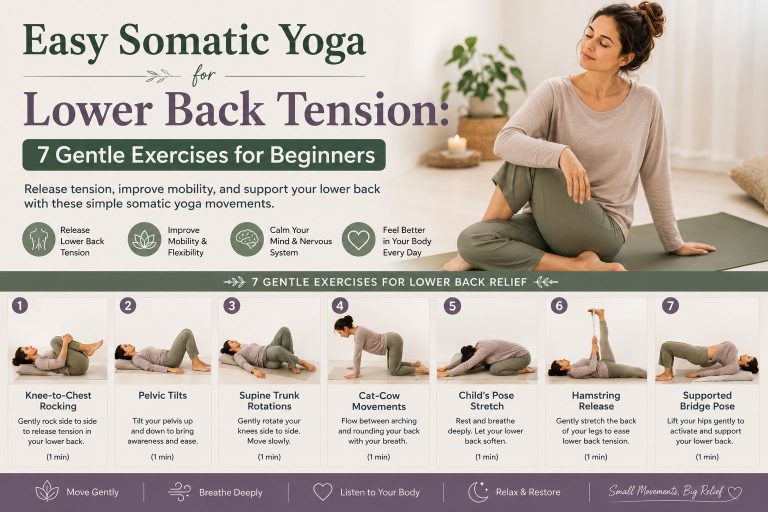
Easy Somatic Yoga for Lower Back Tension: 7 Gentle Exercises for Beginners
Lower back tension is very common, especially for people who sit for long hours, work on laptops, drive often, or spend too…
Read guide →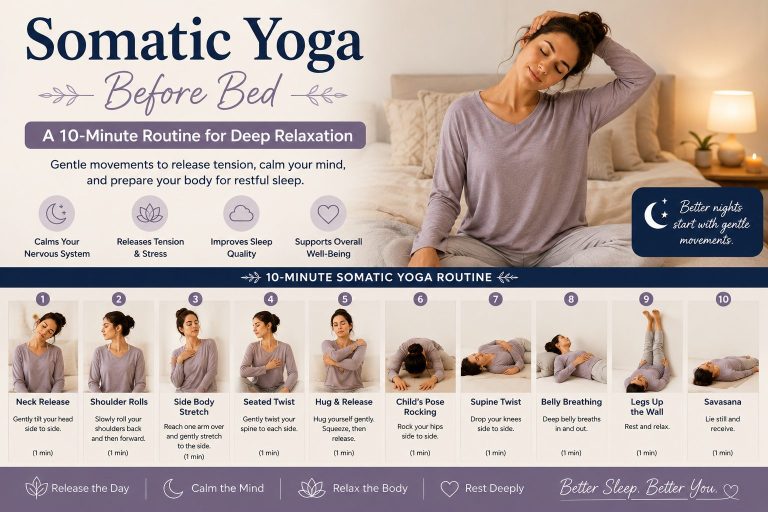
Relaxing Somatic Yoga Before Bed: 10-Minute Routine for Better Sleep
After a long day, your body may feel tired, heavy, stiff, or restless. Many people lie down at night but still feel…
Read guide →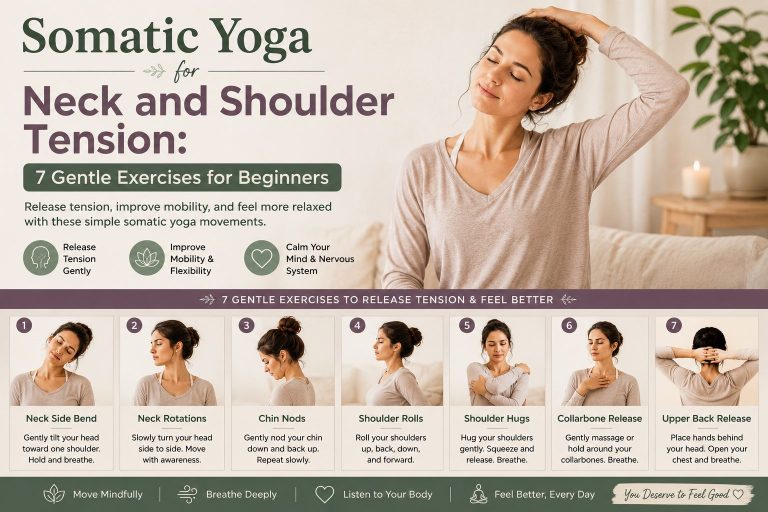
Somatic Yoga for Neck and Shoulder Tension: 7 Gentle Exercises for Beginners
Neck and shoulder tension is something many people feel during daily life. Long screen time, poor posture, stress, driving, phone use, and…
Read guide →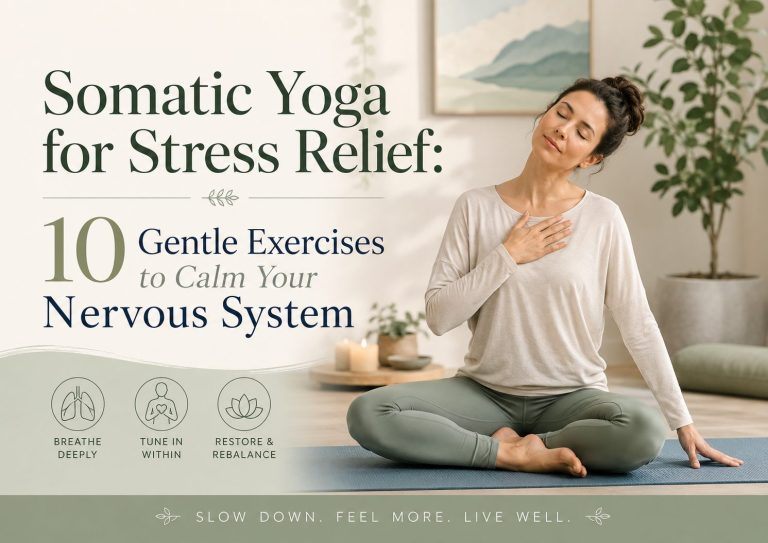
Somatic Yoga for Stress Relief: 10 Gentle Exercises to Calm Your Nervous System
Stress does not only stay in your mind. Many people feel it in the shoulders, neck, jaw, lower back, chest, and even…
Read guide →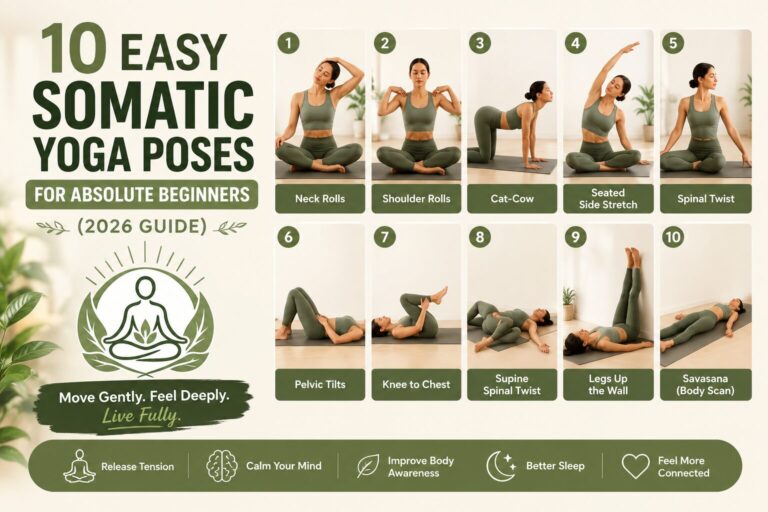
10 Easy Somatic Yoga Poses for Absolute Beginners (2026 Guide)
Have you ever felt tight shoulders, a stiff back, or constant stress even after stretching and exercising? You're not alone. Modern lifestyles…
Read guide →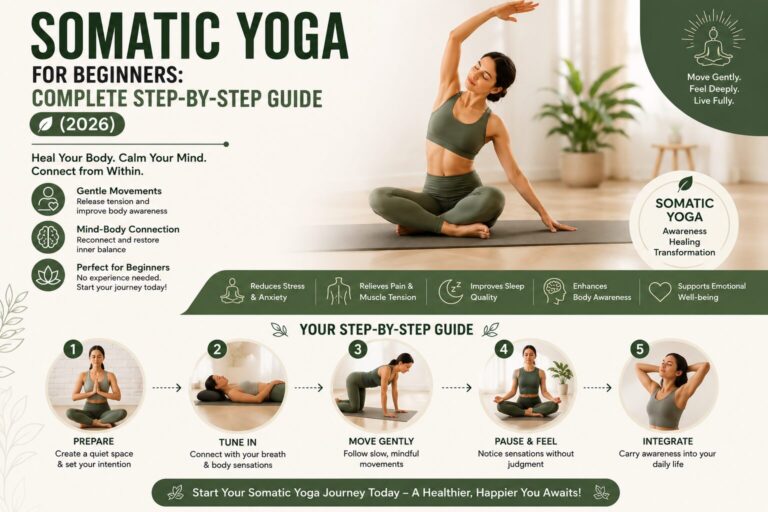
Somatic Yoga for Beginners: Complete Step-by-Step Guide (2026)
If you've ever felt stiff, stressed, anxious, or disconnected from your body, Somatic Yoga for Beginners may be exactly what you need.…
Read guide →Somatic Yoga FAQ
Is somatic yoga suitable for beginners?
Many somatic-style practices use slow pacing and small movements, but suitability depends on your individual health and physical circumstances.
How long should a beginner practice?
A short session can be a reasonable starting point. There is no need to complete a long routine simply because it is available.
Should somatic movement be painful?
No exercise should be forced through sharp or increasing pain. Stop and seek appropriate advice when symptoms are concerning.
Do I need special equipment?
Many beginner movements can be practiced with minimal equipment, although a comfortable surface and appropriate support may help.
Is this medical advice?
No. SomaticYogaUSA.com provides general educational wellness information and does not provide diagnosis or individualized treatment.
Where should I start?
The Somatic Yoga for Beginners guide is the best starting point before exploring more specific movement topics.